Type 2032

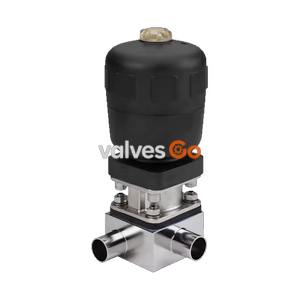
BURKERT 20023076 (Type 2105) pneumatic tank bottom diaphragm valve. Features a stainless steel body, EPDM diaphragm, 0-10 bar pressure range, and ATEX/IECEx approvals for hygienic applications.
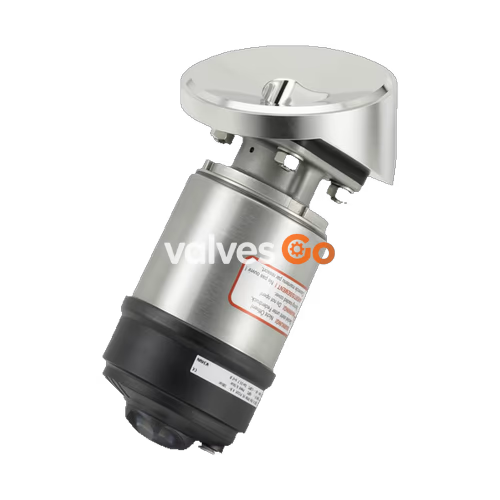
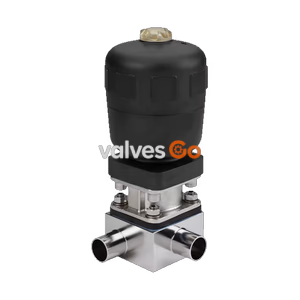
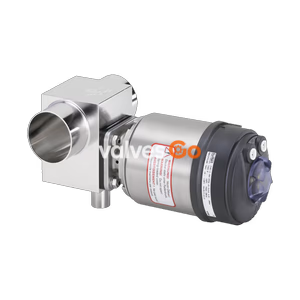
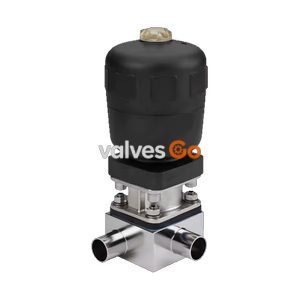
The BURKERT 20023076 (Type 2105) is an externally controlled diaphragm valve consisting of a pneumatically operated piston actuator, a diaphragm, and a tank bottom valve body. The proven and robust actuator with a stainless steel or PPS housing ensures reliable use in hygienic or aggressive ambient conditions. The flow-efficient valve bodies with little dead space enable high flow rates and a wide range of possible uses. The actuator has a compact, autoclavable design with gap-free seals, making it ideal for decentralised automation in the food, beverage, biotechnology, and pharmaceutical industries.
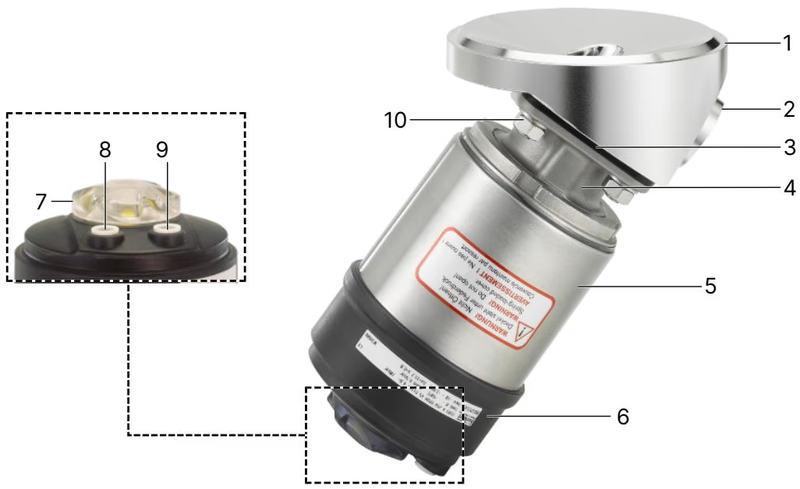
| Feature | Specification |
|---|---|
| Block body material | Stainless steel block material 1.4435 according to DIN EN 10088 and 316L according to ASTM A479 / A479M |
| Diaphragm material | EPDM (AD), PTFE/EPDM (EA), Advanced PTFE/EPDM (EU), laminate of GYLON® and EPDM (ER) |
| Actuator material | DN 08...65: PPS; DN 65...100: Stainless steel 1.4308 |
| Standard surface quality | Internally electrically polished: Ra ≤ 0.38 μm (ASME BPE SF4 / DIN HE4); externally Ra ≤ 1.6 μm |
| Maximum pilot pressure | 10 bar (7 bar for actuator size 130, 225) |
| Operating medium | Neutral gases and liquids, highly purified, sterile, aggressive or abrasive mediums |
| Ambient temperature | -10 °C to +60 °C (autoclavable) |
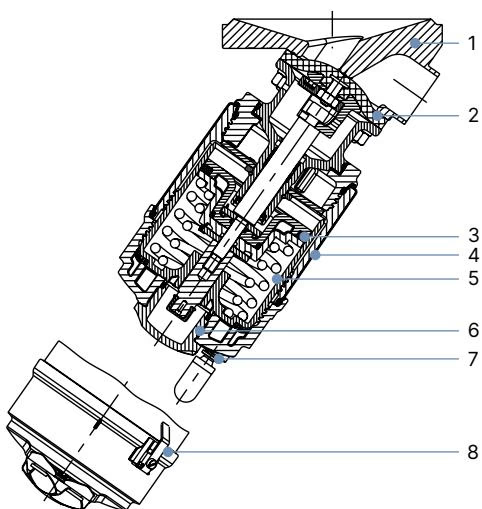
| No. | Element | Material |
|---|---|---|
| 1 | Valve body | Stainless steel |
| 2 | Diaphragm | EPDM (AD), PTFE/EPDM (EA), advanced PTFE/EPDM (EU), laminate of GYLON® and EPDM (ER) |
| 3 | Piston seal | FKM |
| 4 | Cover | Stainless steel 1.4561 (316Ti) |
| 5 | Actuator | Polyphenylene sulphide (PPS) |
| 6 | Transparent cap | Polysulfone (PSU) |
| 7 | Pilot air ports | Push-in connector PP (standard), Thread G 1/8" stainless steel 1.4305 |
NOTICE: Damage to the diaphragm or the actuator
The diaphragm and actuator can be damaged when welding the valve body into the container base or the pipeline.
Welding Sequence:
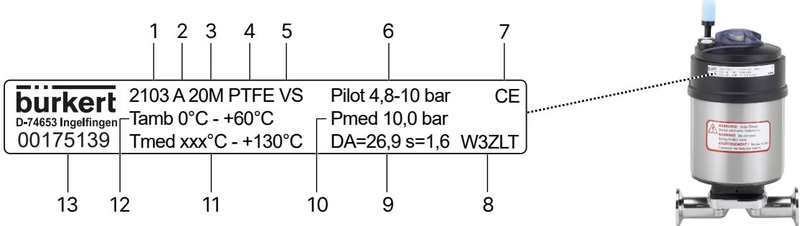
The type label includes essential information such as the control function, diaphragm size, diaphragm material, valve body material, pilot pressure, operating pressure, and permitted temperature ranges.
Explosion Hazard in Ex Areas
If a statically charged device or person discharges suddenly, there is an explosion hazard in the Ex area.
Explore similar products in our catalog