PN16

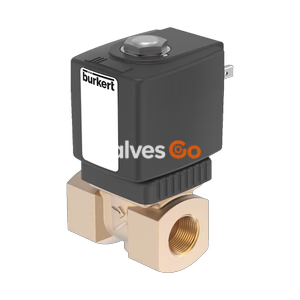
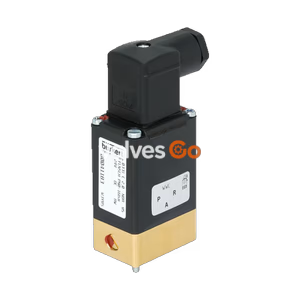
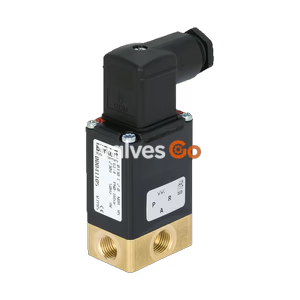
BURKERT 20035090 (Type 0331) is a direct-acting 3/2-way pivoted armature solenoid valve. Features a brass body, EPDM seal, 2mm orifice, and 0-12 bar pressure range for universal circuit functions.
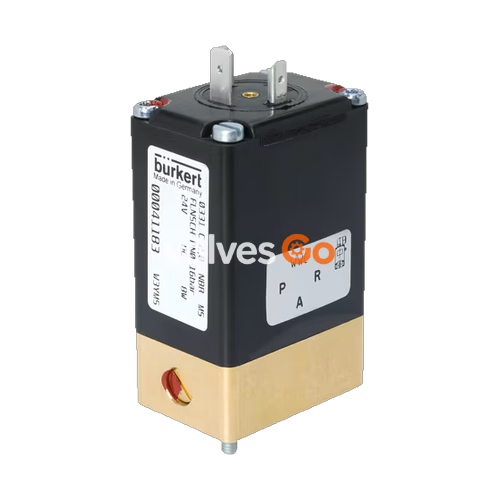
BURKERT 20035090 (Type 0331) is a direct-acting, media-separated pivoted armature solenoid valve. It is configured as a 3/2-way valve with circuit function T (for universal use, flow direction optional). The solenoid actuator and the medium chamber are separated by a diaphragm system, making it highly suitable for critical or aggressive media. This specific model features a brass body, EPDM seal, 2.0 mm orifice, and a Bürkert specific flange connection. It operates at 24 V (50/60 Hz AC) and supports a pressure range of 0 to 12 bar.
| Property | Value |
|---|---|
| Orifice | DN 2 mm |
| Body Material | Brass |
| Seal Material | EPDM |
| Circuit Function | T (3/2-way, universal use) |
| Voltage | 24 V AC (50/60 Hz) |
| Pressure Range | 0 - 12 bar |
| Medium Temperature | -30 °C to +90 °C |
| Ambient Temperature | Max. +55 °C |
| Degree of Protection | IP65 with cable plug |
| Port Connection | Flange interface according to Bürkert standard |
The 20035090 is configured for Circuit Function T (CF T).
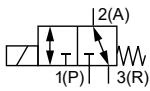
3/2-way solenoid valve, direct-acting, flow direction optional, normally closed.
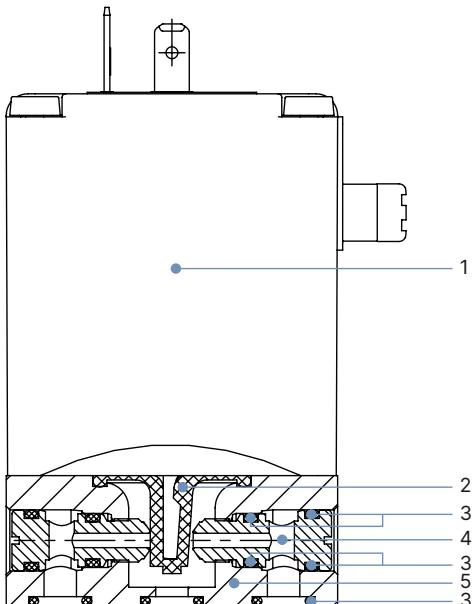
| No. | Element | Material |
|---|---|---|
| 1 | Coil | Epoxy |
| 2 | Diaphragm | EPDM |
| 3 | O-ring | EPDM |
| 4 | Seat | Brass |
| 5 | Valve body | Brass |
Standard Variant - Metal Body
Note
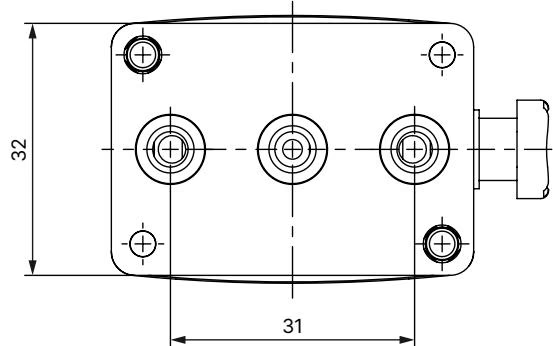
Dimensions in mm. The dimensions of the cable plug Type 2518/2509 can be found in the respective data sheets.
Pressure range and flow rate (Brass body, Standard variant)
| Circuit function | DN | Kv value water (AC) | Pressure range (Standard) |
|---|---|---|---|
| T | 2.0 mm | 0.10 m³/h | 0...12 bar |
Functional Safety Note
During a long period of downtime, at least 1–2 switching operations per restart are recommended. High switching frequency and high pressure will reduce overall service life.
Explore similar products in our catalog