Type 2032

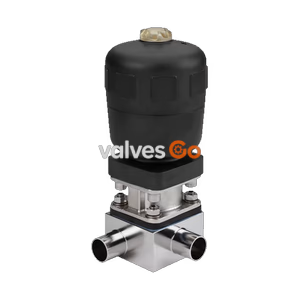
Burkert Type 2933 (SKU 20100646) 2/2-way manual diaphragm valve. Features DN 50 welded connection, forged stainless steel body, EPDM diaphragm, and 0-10 bar pressure range.
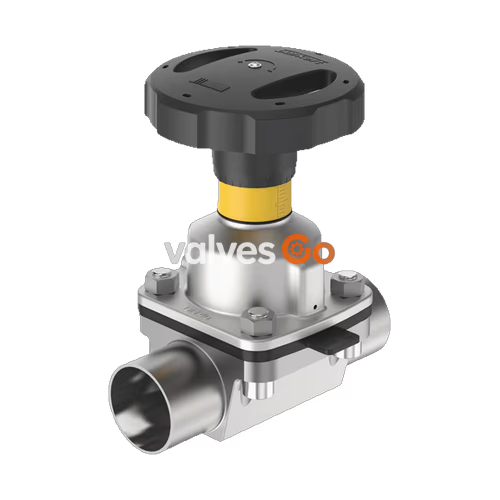
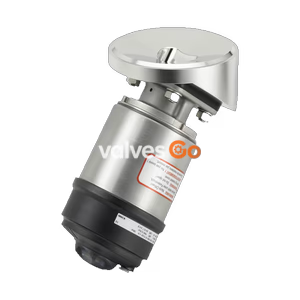
Burkert Type 2933 (SKU 20100646) is a manually operated 2/2-way diaphragm valve consisting of a manual actuator, a diaphragm, and a 2-way valve body. The manual actuator with a plastic handwheel is available with a diaphragm bonnet made of stainless steel, ensuring suitability for hygienic or aggressive ambient conditions. The flow-optimized valve body with minimum dead space enables high flow values and a wide range of possible applications. The actuator has a compact, autoclavable design and is equipped with an integrated visual position indicator, a reproducible stroke scale, and an adjustable closing limiter.
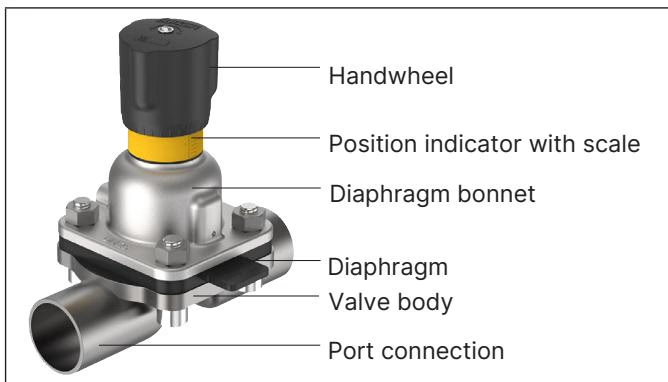
| Feature | Description |
|---|---|
| Valve body material | Forged stainless steel 316L/1.4435 BN2 |
| Diaphragm material | EPDM high-temperature |
| Actuator material | PPS (Polyphenylene sulphide) handwheel, Stainless steel bonnet |
| Nominal diameter | DN 50 (NPS 2) |
| Port connection | Welded (SMS 3008, 51.0x1.2) |
| Medium temperature | -10 to +143 °C (steam sterilisation +150 °C for 60 min) |
| Ambient temperature | -10 to +130 °C (short-term up to +150 °C), autoclavable |
| Operating pressure | 0 to 10 bar |
| Kv value (water) | 66 m³/h |
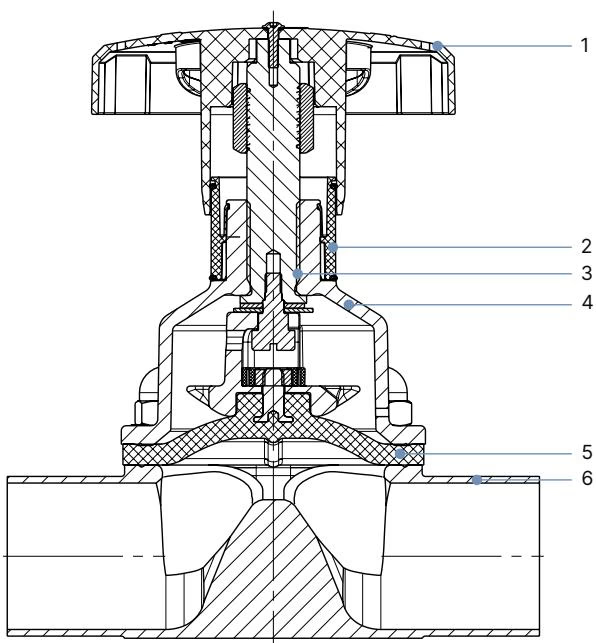
| No. | Element | Material |
|---|---|---|
| 1 | Handwheel | Polyphenylene sulphide (PPS), stainless steel 1.4308 |
| 2 | Visual position indicator | Polyamide (PA), Stainless steel 1.4305 |
| 3 | Valve spindle | Stainless steel 1.4305 |
| 4 | Diaphragm bonnet | Stainless steel 1.4308, polyphenylene sulphide (PPS) |
| 5 | Diaphragm | EPDM |
| 6 | Valve body | Forged stainless steel 316L/1.4435 BN2 |
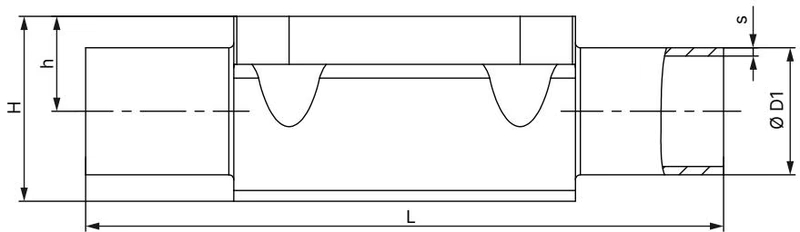
(Note: Dimensions vary by specific connection standard and diaphragm size. Refer to the full manual for complete dimensional tables.)
By manually overriding the handwheel, the force is transmitted via a spindle and the valve is opened or closed. The medium in the valve body is either approved or blocked off. Turning the handwheel anticlockwise opens the valve, turning it clockwise closes it.
TIP
To protect the actuator, we recommend not closing the actuator with more force than is required to close the valve tightly.
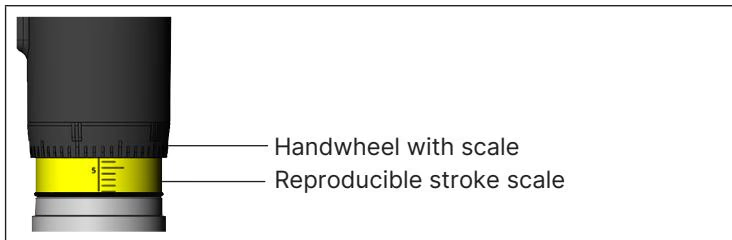
Turning the handwheel counterclockwise reveals the yellow position indicator and the scale marked on it as the valve opens further. The scale on the handwheel determines the rotation position of the handwheel. The stroke scale shows the relative position of the valve and serves as a fixation point for determining the rotation position.
WARNING
The visibility of the yellow mark is not directly correlated with the closed position of the valve. Depending on the structure of the valve, the marking may not be visible when the valve is open, or be visible when the valve is closed.
Type 2933 features a minimum stroke limit which also serves as a closing limiter to protect the diaphragm. A hexagon nut is used to do this.
Explore similar products in our catalog