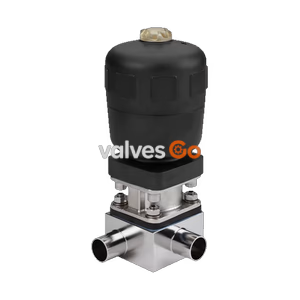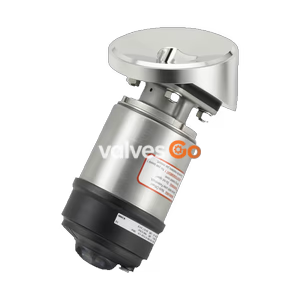
Type 2032

Burkert Type 2933 manually operated 2/2-way diaphragm valve. Features a plastic or stainless steel handwheel, visual position indicator, and autoclavable design. Suitable for hygienic and aggressive media.
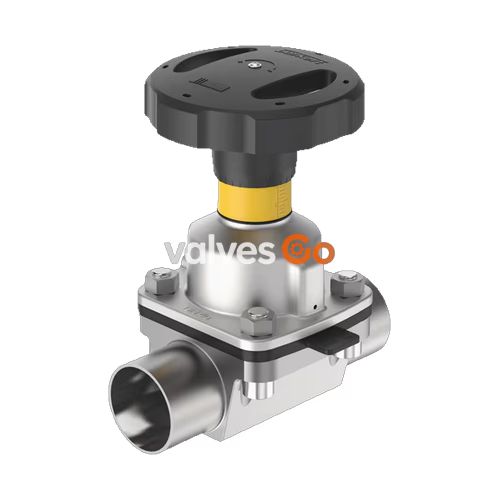
BURKERT Type 2933 manually operated diaphragm valve consists of a manually operated actuator, a diaphragm, and a 2-way valve body. The manual actuator with a plastic or stainless steel handwheel is available with a diaphragm bonnet made of stainless steel or plastic, ensuring reliable use in hygienic or aggressive ambient conditions. The flow-optimized valve body with minimum dead space enables high flow values and a wide range of possible applications.
The actuator has a compact, autoclavable design and is compatible with all other Bürkert diaphragm valves. The manual actuator is equipped with an integrated visual position indicator, a reproducible stroke scale, and an adjustable closing limiter. The manual actuator can optionally be equipped with sensors for position feedback.
The product family includes several body and actuator variants to suit different process requirements:
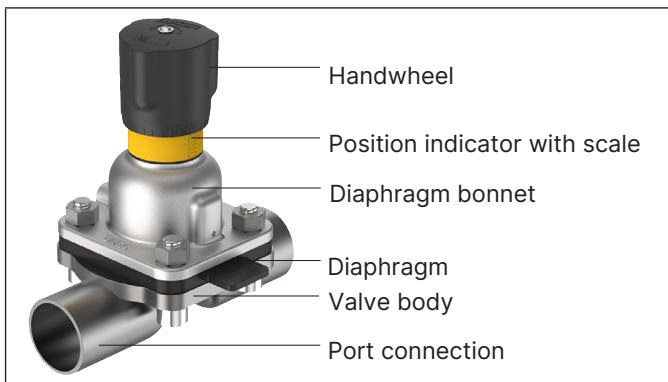
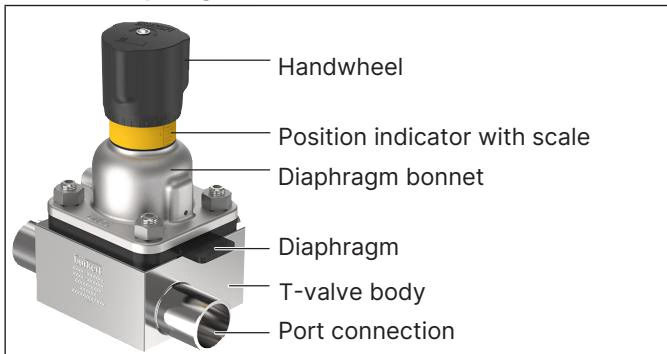
Depending on the selected configuration, the valves comply with stringent industry standards:
WARNING
The ambient and medium temperature range may be limited by non-Ex-relevant specifications. Always observe the operating instructions and the specific Ex type label when operating in potentially explosive atmospheres.
The valve body and diaphragms are available in all common materials and variants to meet the unique challenges of hygienic and sterile requirements.
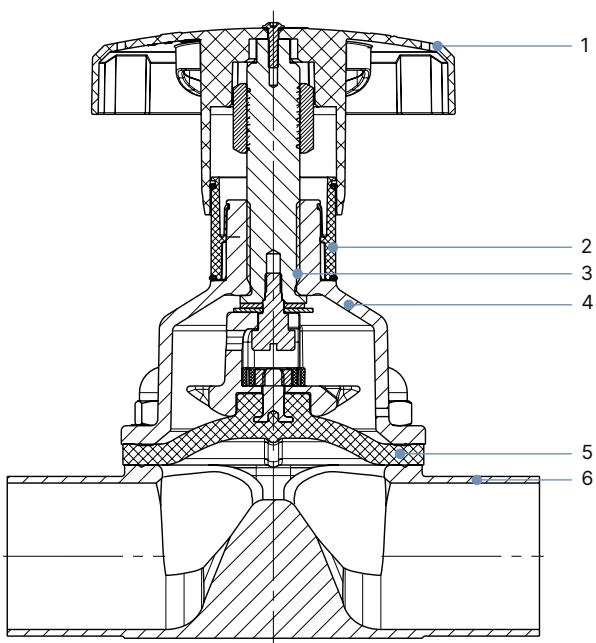
| No. | Element | Material |
|---|---|---|
| 1 | Handwheel | Polyphenylene sulphide (PPS), stainless steel 1.4308 |
| 2 | Visual position indicator | Polyamide (PA), Stainless steel 1.4305 |
| 3 | Valve spindle | Stainless steel 1.4305 |
| 4 | Diaphragm bonnet | Stainless steel 1.4308, polyphenylene sulphide (PPS) |
| 5 | Diaphragm | EPDM (AD), PTFE/EPDM (EA), advanced PTFE/EPDM (EU), laminate of GYLON® and EPDM (ER) |
| 6 | Valve body | Forged steel, Tube valve body, Cast valve body, Plastic (PVC-C, PVC-U, PP, PVDF) |
| Material | Temperature Range | Sterilization |
|---|---|---|
| EPDM (AD) | -10...+143 °C | Steam sterilisation up to +150 °C for 60 min |
| FKM (FF) | 0...+130 °C | No steam, dry heat up to +150 °C for 60 min |
| PTFE (EA) | -10...+130 °C | Steam sterilisation up to +140 °C for 60 min |
| Advanced PTFE (EU) | -5...+143 °C | Steam sterilisation up to +150 °C for 60 min |
| GYLON® (ER) | -5...+130 °C | Steam sterilisation up to +140 °C for 60 min |
The values are valid for valve bodies made from plastic and stainless steel (block material, forged, cast, and tube valve body).
| Diaphragm size | EPDM / FKM [bar] | PTFE / Advanced PTFE / GYLON® [bar] |
|---|---|---|
| 8 to 40 | 10 | 10 |
| 50 | 7 / 10 (depending on actuator material) | 7 / 10 (depending on actuator material) |
| 65 to 80 | 10 | 10 |
| 100 | 6 | 6 |
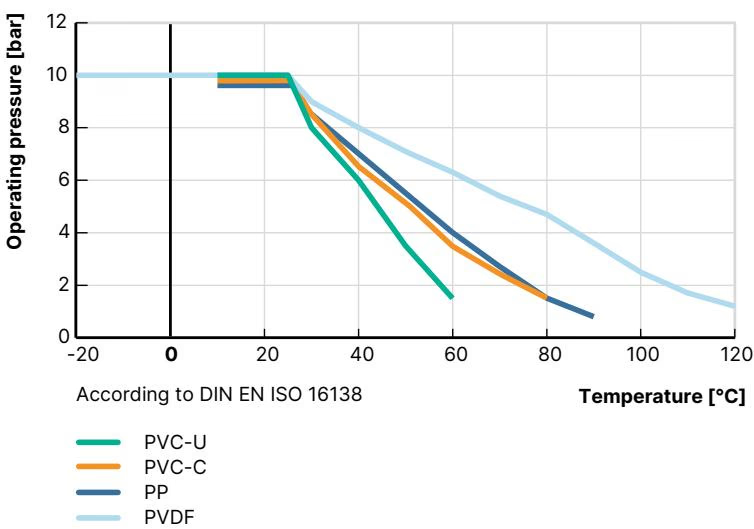
This information is important for material selection. Observe the permissible operating pressure depending on the medium temperature.
Self-Draining Installation
To ensure self-draining, the inclination angle of the pipeline should correspond to the valid ASME BPE recommendations. The self-draining angle (α) depends on the valve body size and the inner diameter of the port connection (DN). The marking on the port connection of the valve body serves as an orientation aid and must point upwards.
DANGER
Risk of injury due to high pressure and escaping medium. Switch off the pressure before working on the device or system. Vent or empty the lines.
Explore similar products in our catalog