Type 2032

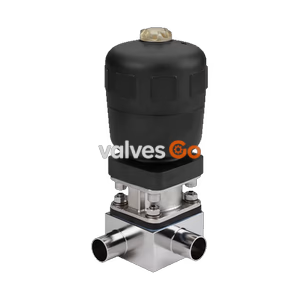
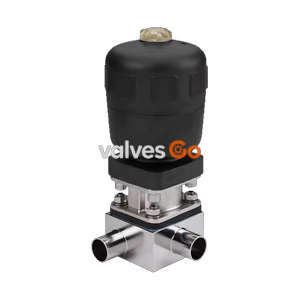
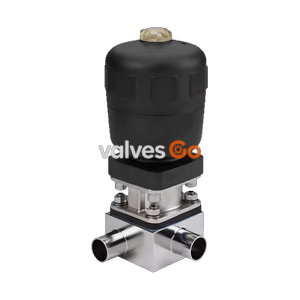
Bürkert Type 2105 tank bottom diaphragm valve with pneumatic actuator. Features a stainless steel body, 0-10 bar pressure range, and hygienic design for sterile applications.
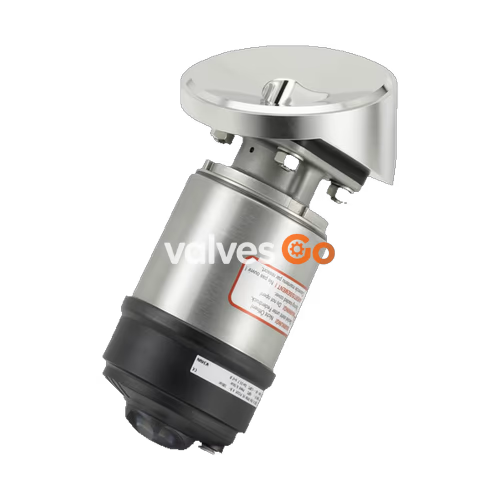
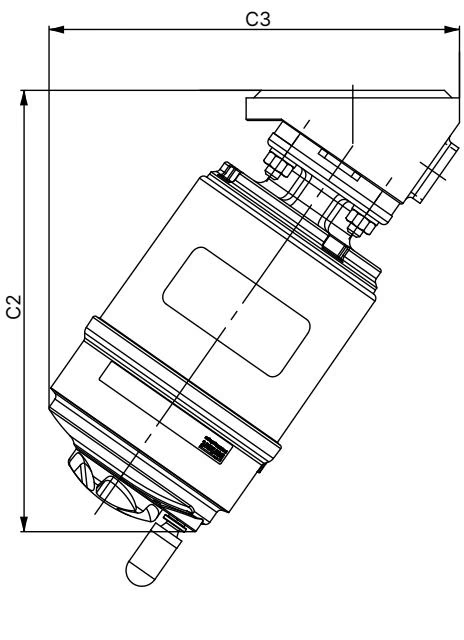
Bürkert Type 2105 is an externally controlled diaphragm valve consisting of a pneumatically operated piston actuator, a diaphragm, and a tank bottom valve body. The proven and robust actuator with a stainless steel or PPS housing ensures reliable use in hygienic or aggressive ambient conditions. The flow-efficient valve bodies feature minimal dead space, enabling high flow rates and a wide range of applications in the food, beverage, biotechnology, and pharmaceutical industries.
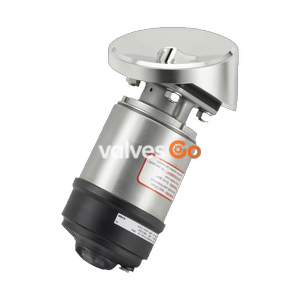
The actuator features a compact, autoclavable design with gap-free seals. The integration of automation units (Type ELEMENT) is possible in all configuration levels, and a fieldbus interface can also be integrated. The system is highly integrated, featuring internal pilot air ducts that prevent the intake of ambient air.
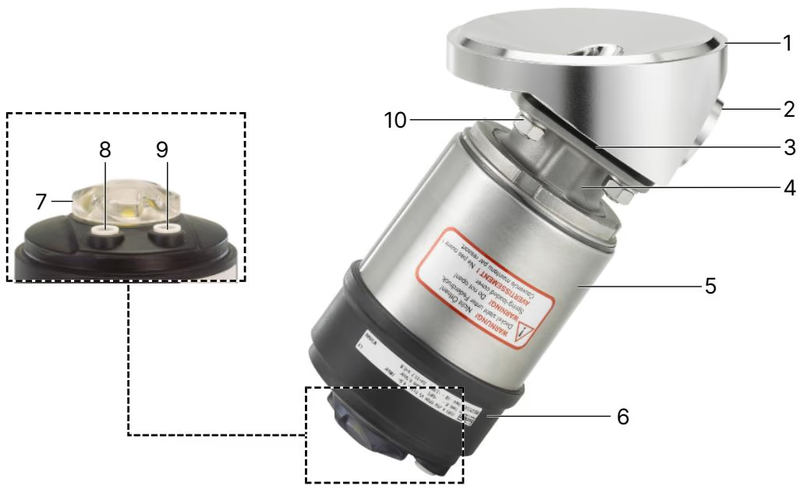
| Feature | Specification |
|---|---|
| Block body material | Stainless steel block material 1.4435 (DIN EN 10088) / 316L (ASTM A479) |
| Diaphragm material | EPDM (AD), PTFE/EPDM (EA), Advanced PTFE/EPDM (EU), GYLON®/EPDM (ER) |
| Actuator material | DN 08...65: PPS DN 65...100: Stainless steel 1.4308 |
| Standard surface quality | Internally electrically polished: Ra ≤ 0.38 μm (ASME BPE SF4) Internally mechanically polished: Ra ≤ 0.5 μm (ASME BPE SF1) |
| Maximum pilot pressure | 10 bar (7 bar for actuator sizes 130, 225) |
| Operating medium | Neutral gases and liquids, highly purified, sterile, aggressive or abrasive media |
| Ambient temperature | -10 °C to +60 °C (autoclavable) |
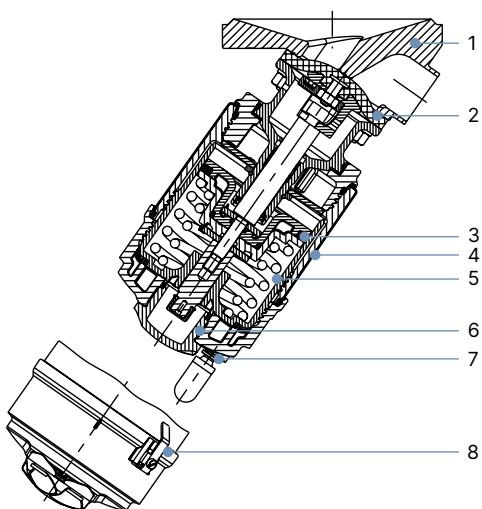
| No. | Element | Material |
|---|---|---|
| 1 | Valve body | Stainless steel |
| 2 | Diaphragm | EPDM, PTFE/EPDM, Advanced PTFE/EPDM, GYLON®/EPDM |
| 3 | Piston seal | FKM |
| 4 | Cover | Stainless steel 1.4561 (316Ti) |
| 5 | Actuator | Polyphenylene sulphide (PPS) |
| 6 | Transparent cap | Polysulfone (PSU) |
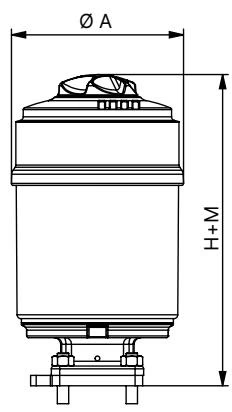
Welding Precautions
Damage to the diaphragm or the actuator can occur when welding the valve body into the container base or the pipeline. In the case of devices with a welded connection, remove the actuator and diaphragm from the valve body before installation.
Explosion Hazard (ATEX/IECEx)
For devices used in potentially explosive atmospheres (Zones 1/21 and 2/22), ensure proper grounding of the actuator and valve body to prevent electrostatic discharge. Do not use media with a conductivity ≤100 pS/m if the flow velocity exceeds 1 m/s unless the pipeline is monitored to prevent running dry.
Explore similar products in our catalog