PN16

BURKERT Type 8640 (Model 338342) modular valve island for pneumatics. Features 19mm width per station, G 1/4 pressure port, 3/2 valve function, and multi-pole connection.
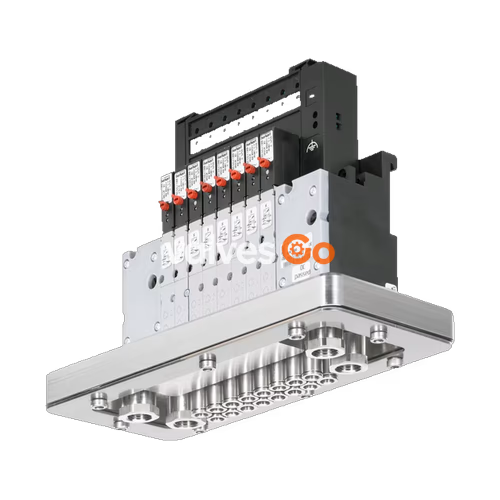
BURKERT 338342 Type 8640 modular valve island is designed to solve diverse and complex control problems due to its systematic modular construction and combination of pneumatic and electrical interfaces. By putting together a row of pneumatic modules with different numbers of valves, multiple valve functionalities may be realized on one valve unit. Electrical connectivity is achieved by either fieldbus interfaces, common connection (parallel connection technique) or multipin interfaces.

The 19 mm width per station variant utilizes Type 5470 solenoid valves, which consist of a pneumatic valve body fitted with a Type 6106 rocker pilot valve. An armature with a tilting bearing, similar to a rocker, tilts within the body of the pilot valve, and switches the valve. The minimal tilting movement of the rocker is non-wearing, and basic lubrication is unnecessary.
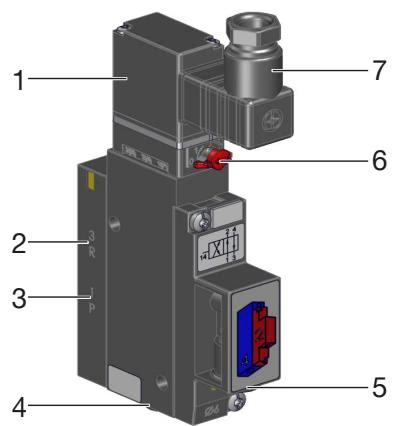
Designation:
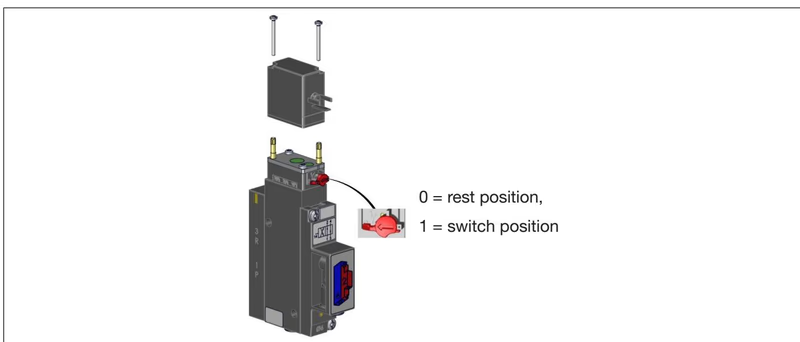
To operate the valve manually, press the manual override and turn it 90° clockwise (until it stops). The manual override is locked and does not reset automatically.
WARNING
Only operate the manual override when the power is off.
| Symbol | Description |
|---|---|
| C | 3/2-way valve. In rest position, pressure port 1 (P/NC) closed, working port 2 (A/OUT) open after port 3 (R/NO). |
| D | 3/2-way valve. In rest position, pressure port 1 (P/NO) open after working port 2 (B/OUT), port 3 (R/NC) closed. |
| G | 4/2-way valve. In rest position, pressure port 1 (P) open after working port 2 (A), working port 4 (B) open after port 3 (R). |
To convert the 4/2-way valve to a 3/2-way valve, depending on the desired circuit function, close port 2 or port 4 with a stopper.
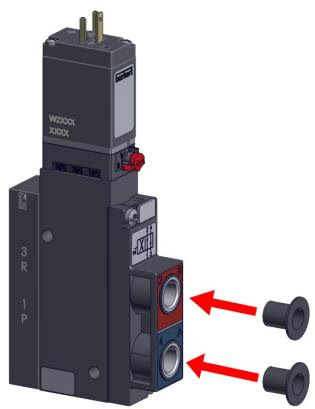
| Port 2 | Port 4 | Circuit function |
|---|---|---|
| closed | open | C |
| open | closed | D |
::: note Pilot pressure for pneumatic control unit depends on the pressure of the flow medium; it must be between 2 ... 10 bar (at least 70% of operating pressure). Pressure difference between port 1 and 3 of at least 2 bar. When temperatures are below 0 °C then operation is restricted to dried air. :::
| Parameter | Value |
|---|---|
| Ambient temperature | -10 ... +55 °C |
| Medium temperature | -10 ... +50 °C |
| Medium | Filtered compressed air (particle size max. 10 μm), preferably unlubricated; neutral gases (5 μm filtering) |
| Seal material | NBR |
| Operating pressure range | 2 ... 10 bar |
| Parameter | Value |
|---|---|
| Electrical connection | Cable plug Type 2516 on the plug contacts of the coil (torque for fastening: 1 Nm). |
| Voltage tolerance | ±10% |
| Degree of protection | IP65 (only in conjunction with cable plug Type 2516) |
DANGER
Risk of injury due to high pressure and escaping medium. Switch off the pressure before working on the device or system. Vent or drain the pipes.
Risk of injury due to electric shock. Switch off voltage before working on the device or system. Secure against reactivation.
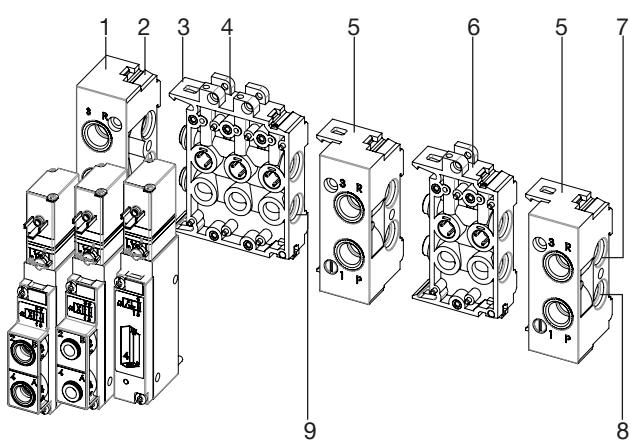
WARNING
Crushed O-rings and profile seals lead to leaky blocks.
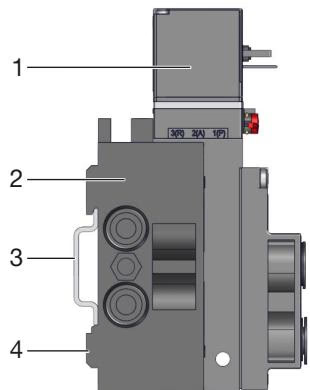
Standard rail installation:
Wall installation:
| Fault | Possible cause | Remedy |
|---|---|---|
| Valves do not switch | No operating voltage or operating voltage too low | Check electrical connection. Ensure operating voltage according to type label. |
| Manual override not in zero position | Bring manual override to zero position. | |
| Pressure supply insufficient or not available | Set up large-volume pressure supply. Minimum operating pressure ≥ 2 bar. | |
| Valves switch with a delay or blow off at the exhaust ports | Pressure supply insufficient or not available | Set up large-volume pressure supply. Minimum operating pressure ≥ 2 bar. |
| Valves are not in the home position (de-energised) during pressure build-up | Apply pressure to the valve block before the valves are switched. | |
| Insufficient ventilation of the exhaust air ducts due to too small or dirty silencers | Use suitably sized silencers or expansion vessels. Clean the dirty silencers. | |
| Leaky valve blocks | Missing or crushed O-rings between the modules | Identify leak or missing seals. |
| Missing or incorrectly positioned flat seals between valve and base plate | Insert missing seals or replace damaged seals. |
Explore similar products in our catalog