IP66/67

Burkert Type 8131 non-contact radar level transmitter for liquids and bulk solids. Features 80 GHz technology, 0-20m range, 4-20 mA/HART, and Bluetooth setup.
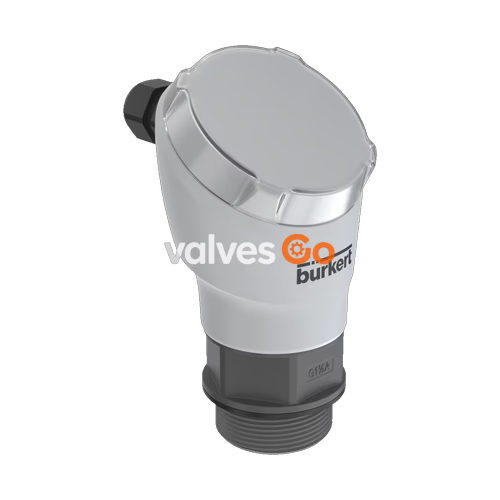
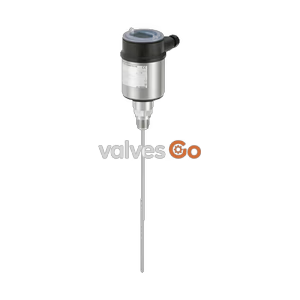
BURKERT Type 8131 is a non-contact radar level meter, ideal for continuous level measurement of liquids and bulk solids in basic applications. It is particularly suitable for storage tanks, water treatment applications (open channel measurement) as well as through plastic tanks. For solids, it can be used in small silos or open tanks.

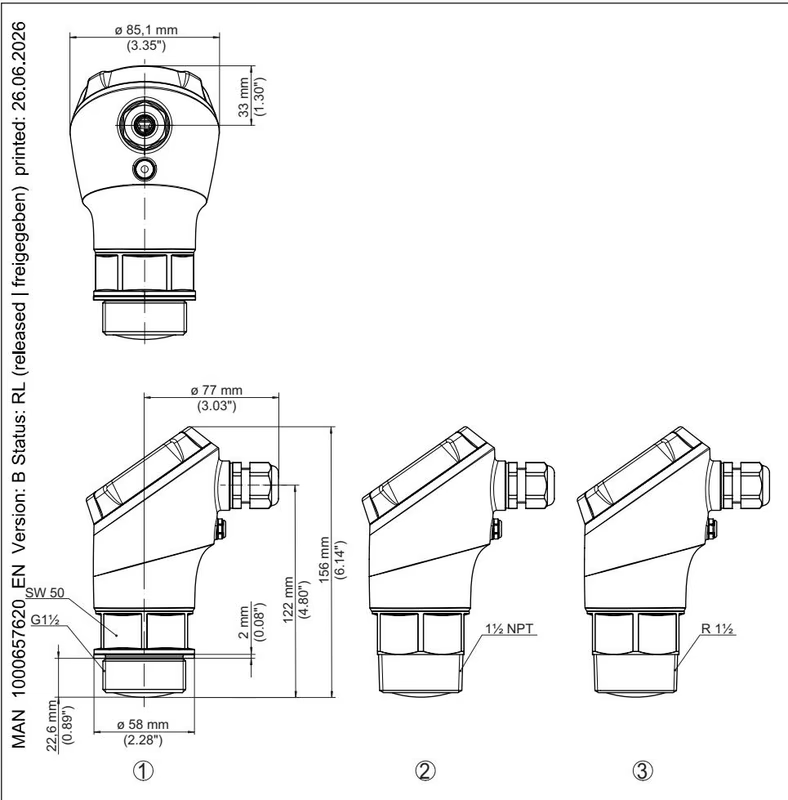
The radar level meter, available in 1 1/2" with G, NPT or R connection, is equipped with a plastic housing and a plastic integrated antenna. The excellent focus of the radar signal and the high measurement dynamics allow excellent measurement results even in small, narrow and high containers, as the risk of signal interference by installations, constructions and vessel walls is significantly reduced. Signal damping, e.g. due to signal length, foaming or low dielectric constant values of liquids, becomes much less important.
| Property | Description |
|---|---|
| Measuring range | 0...10 m or 0...20 m depending on application and medium |
| Measuring frequency | W-Band (80 GHz technology) |
| Beam angle | 8° |
| Process connection | G, NPT or R 1 1/2 thread (PVDF) |
| Antenna material | PVDF |
| Housing material | PBT (polyester) |
| Operating voltage | 12...35 V DC |
| Output | Variant 0...10 m: 4...20 mA Variant 0...20 m: 4...20 mA/HART |
| Process temperature | Variant 0...10 m: -40...+60 °C Variant 0...20 m: -40...+80 °C |
| Process pressure | -1...3 bar (-100...300 kPa) |
| Degree of protection | IP66/IP67 with M20 × 1.5 cable plug mounted and tightened |
WARNING
Any unauthorized modifications made to the device will invalidate the Ex-certification. For safety reasons, the instrument must only be operated within the permissible process conditions specified on the type label.
The centre of the antenna lens is the beginning of the measuring range and at the same time the reference plane for the min./max. adjustment.
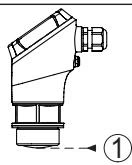
When mounting the device, keep a distance of at least 200 mm from the vessel wall. If the device is installed in the center of dished or round vessel tops, multiple echoes can arise. However, these can be suppressed by an appropriate adjustment.
Do not mount the instruments in or above the filling stream. Make sure that you detect the medium surface, not the inflowing product. With threaded connection, the antenna end should protrude at least 5 mm out of the nozzle.
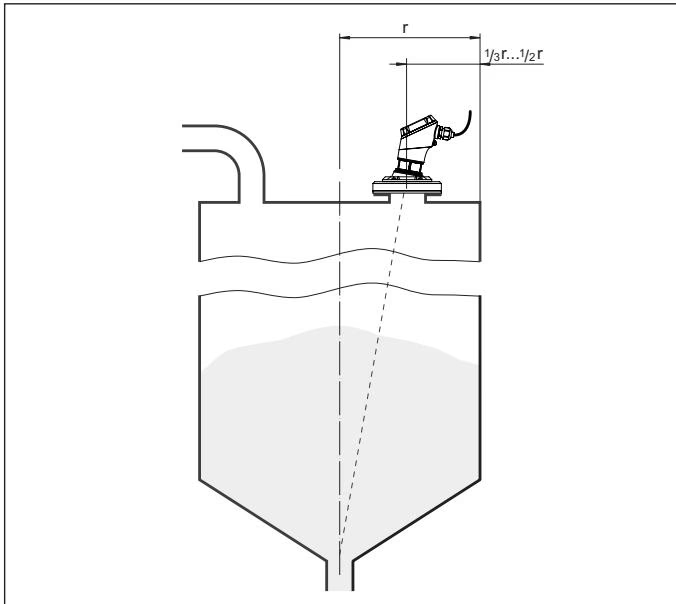
In order to measure as much of the vessel volume as possible, the device should be aligned so that the radar signal reaches the lowest level in the vessel. In a cylindrical silo with conical outlet, the sensor is mounted anywhere from one third to one half of the vessel radius from the outside wall.
TIP
If large vessel installations such as struts or supports cause false echoes, these can be attenuated through supplementary measures. Small, inclined sheet metal baffles above the installations "scatter" the radar signals and prevent direct interfering reflections.
Devices with integrated Bluetooth module can be adjusted wirelessly via standard adjustment tools such as a smartphone/tablet (iOS or Android) or a PC/notebook with a Bluetooth USB adapter.
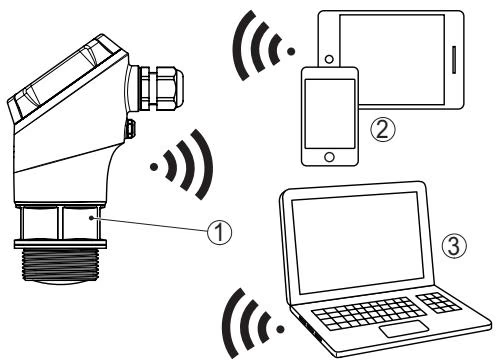
Operation is via the free App "Wireless Device Configurator". A Bluetooth access code is required to establish communication, which is printed on the device housing and supplied with the device.
Explore similar products in our catalog