
Up to 99.8% Efficiency

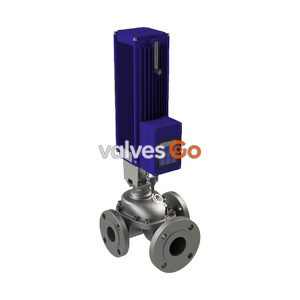
Burkert Type 2100 pneumatically operated 2/2-way angle seat valve ELEMENT. Features high flow rates, long service life, and easy integration for decentralized automation.
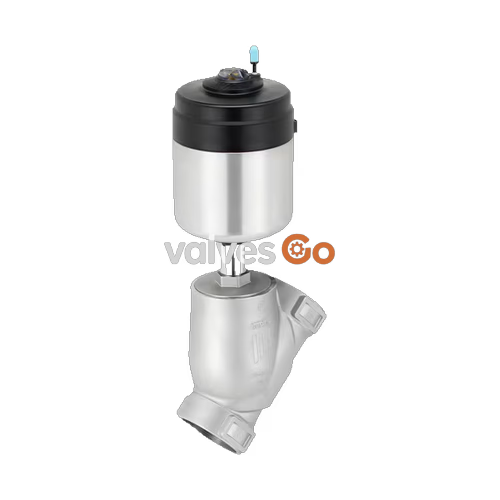
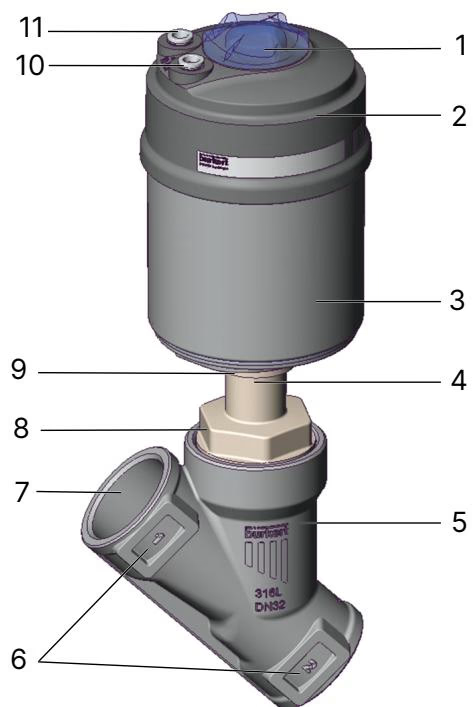
Burkert Type 2100 angle seat valve is specially optimised for decentralized process automation and fulfils the tough criteria in process environments. Its unique design allows easy integration of automation units in all expansion stages, from electrical/optical position feedback to pneumatic control and integrated fieldbus interface. Maximum service life and tightness are achieved by the proven self-adjusting v-seal packing gland. The highly integrated system of valve and automation unit is characterised by its compact and smooth design, integrated pilot air ducts, protection classes IP65/67, NEMA Type 4X and high resistance to chemicals.

| Product properties | Details |
|---|---|
| Design | Angle seat valve |
| Nominal diameter | DN 10...DN 80, NPS 3/8...NPS 3 |
| Safety setting | Normally closed (control function A), normally open (control function B) |
| Flow direction | Flow to open (below seat), flow to close (above seat) |
| Operating pressure | 0 bar(g)...25 bar(g), vacuum variants...- 0.9 bar(g) (option) |
| Nominal pressure | PN 25 (DIN EN 1333), Class 150 (DIN EN 1759) |
| Pilot pressure | 2.5 bar(g)...10 bar(g) |
| Seat leakage | Leakage rate A (DIN EN 12266 - 1), seat seal PTFE and PEEK, test medium air |
| Operating medium | Steam, water, neutral gases, alcohols, oils, fuels, hydraulic fluids, salt solutions, alkalis, organic solvents, oxygen and fuel gases |
| Medium temperature | - 40 °C...+ 230 °C |
| Ambient temperature | - 10 °C...+ 100 °C |
| Degree of protection | IP65/67 |
| Installation position | As required, preferably with actuator in upright position |
WARNING
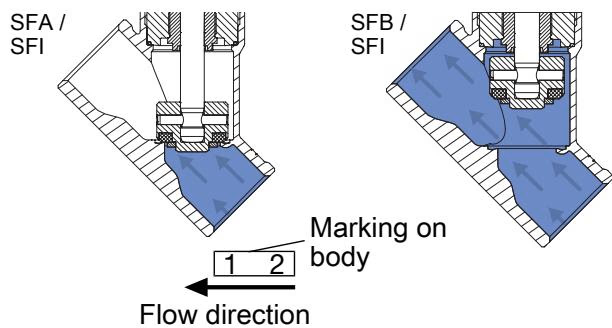
Risk of damage due to bursting pipes and bursting equipment when the flow is above the seat. In the case of liquid mediums, water hammer can occur causing pipes and the device to burst. Do not use valves with flow above the seat for liquid mediums.
Flow direction below the seat Only use flow direction below the seat for liquid media, gases, and vapours. As the medium is present under the swivel plate, the operating pressure contributes to the opening of the valve.
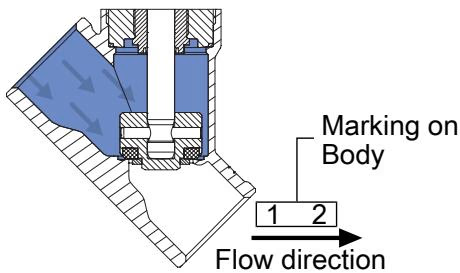
Flow direction above the seat Only use flow direction above the seat for gases and vapours, and valves with control function A (closed by spring force in rest position). As the medium is present above the swivel plate, the operating pressure contributes to the closing of the valve. The operating pressure also supports the sealing of the valve seat.
| Element | Material |
|---|---|
| Actuator cover | PPS |
| Actuator casing | Stainless steel 1.4561 (316Ti) |
| Piston seal | FKM |
| Packing gland | PTFE V-Rings (filled), with spring compensation |
| Spindle guide | PEEK |
| Swivel plate | Stainless steel 1.4401 (316)/1.4404 (316L) |
| Seat seal | PTFE, PEEK (Option) |
| Valve body | Stainless steel CF3M |
INFO
The lubricants for packing gland and actuator are classified according to NSF H1.
DANGER
Medium under pressure Medium under pressure can seriously injure people. In the event of overpressure or pressure surges, the device or lines can burst. Pneumatic lines that are defective or not securely fastened can come loose and swing around. Before working on the device or system, switch off the pressure. Vent or empty the lines.
WARNING
Hot surfaces and fire hazard The surface of the device can become hot with fast-switching actuators or with hot media. Wear suitable protective gloves. Keep highly flammable substances and media away from the device.
Explore similar products in our catalog