Ductile Cast Iron

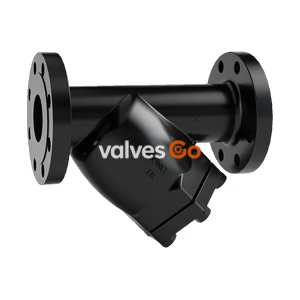
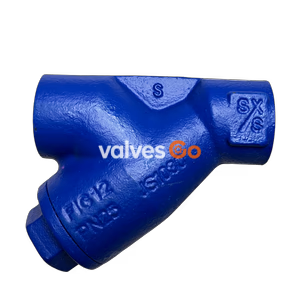
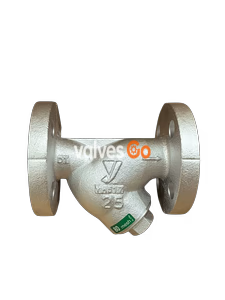
Yoshitake SY-5 Y-type strainer featuring a ductile cast iron body and stainless steel screen. Max pressure 2.0 MPa, max temperature 220℃. Suitable for steam, air, water, and oil.
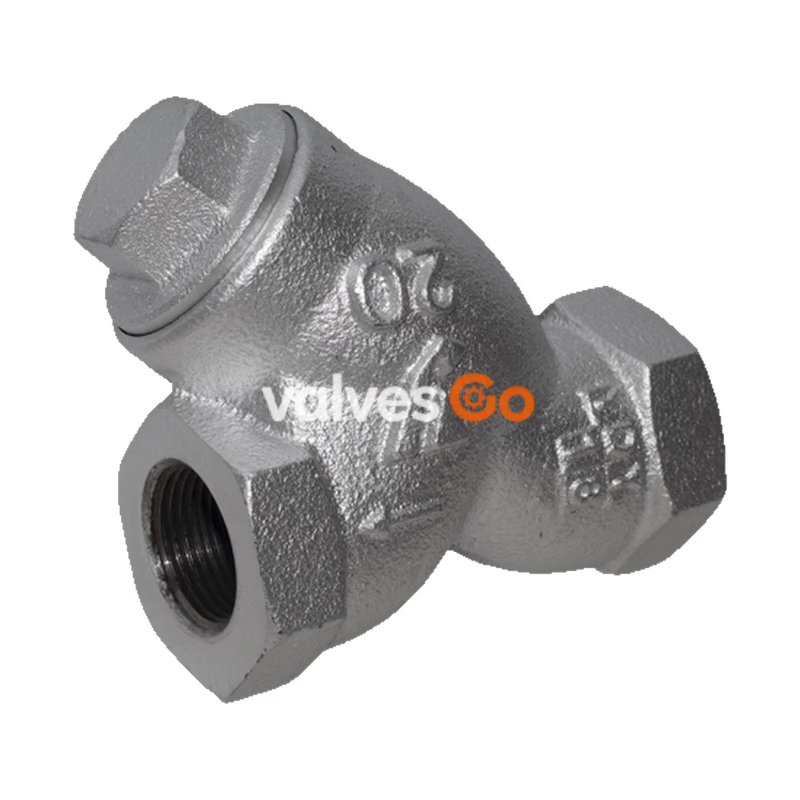
Yoshitake SY-5 is a versatile, compact, lightweight, and economical Y-type strainer. It features a high-flow-rate marine type design with the largest possible filtration area to minimize flow rate decreases caused by clogging. The strainer is ideal for protecting pressure reducing valves, temperature regulators, steam traps, and other pipeline equipment.
| Application | Steam, Air, Cold and hot water, Oil, Other non-dangerous fluids |
|---|---|
| Maximum Pressure | 2.0 MPa |
| Maximum Temperature | 220℃ |
| Body Material | Ductile cast iron |
| Screen Material | Stainless steel |
| Screen Perforation | φ2.5-4P |
| Screen Mesh | Standard 80 mesh |
| Connection | JIS Rc screwed |
INFO
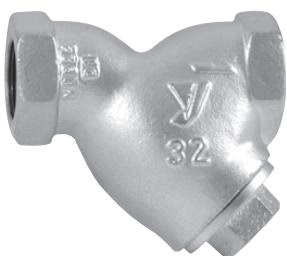
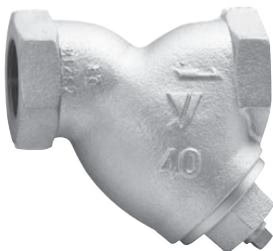
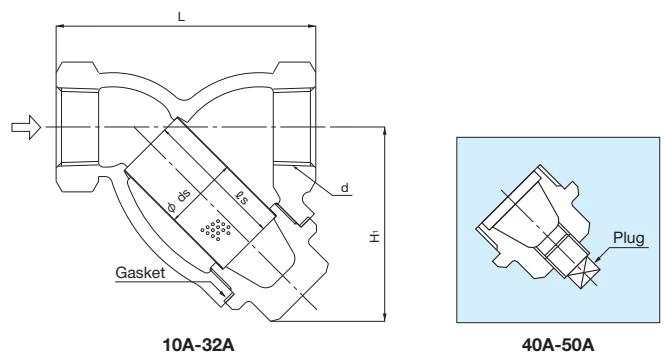
| Size | d | L | H1 | ds | ls | Plug Size | Weight (kg) |
|---|---|---|---|---|---|---|---|
| 10A | Rc 3/8 | 65 | 50 | 18 | 32 | (Rc 1/4) | 0.4 |
| 15A | Rc 1/2 | 75 | 55 | 20 | 35 | (Rc 1/4) | 0.6 |
| 20A | Rc 3/4 | 90 | 70 | 25 | 50 | (Rc 3/8) | 0.9 |
| 25A | Rc 1 | 110 | 85 | 32 | 60 | (Rc 3/8) | 1.4 |
| 32A | Rc 1-1/4 | 135 | 95 | 40 | 70 | (Rc 3/8) | 2.2 |
| 40A | Rc 1-1/2 | 145 | 105 | 45 | 75 | Rc 3/8 | 3.4 |
| 50A | Rc 2 | 170 | 120 | 55 | 90 | Rc 3/8 | 4.8 |
(Note: The plug size in parentheses is for cases ordered with a plug.)
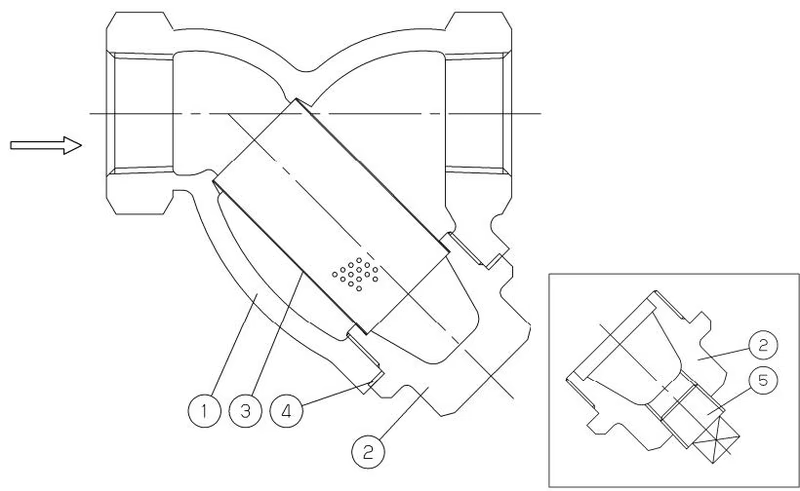
| No. | Name of Parts | Material |
|---|---|---|
| 1 | Body | Ductile Cast Iron |
| 2 | Cap | Ductile Cast Iron |
| 3 | Screen | Stainless Steel |
| 4 | Gasket | Non-Asbestos |
| 5 | Plug | Carbon Steel or Malleable Cast Iron |
The screen removes dust, scale, and other foreign matter out of the fluid flowing from the inlet port of the strainer.
When selecting the nominal diameter of the pipe, consider the standard flow velocity for the fluid kind to avoid noise, vibration, and excessive pressure drops.
Standard Flow Velocity of Fluid
| Fluid | Standard flow velocity |
|---|---|
| Water, Oil | 2 ~ 4 m/s |
| Steam | 20 ~ 40 m/s |
Pressure Loss Diagram (For Water)
WARNING
Piping Examples
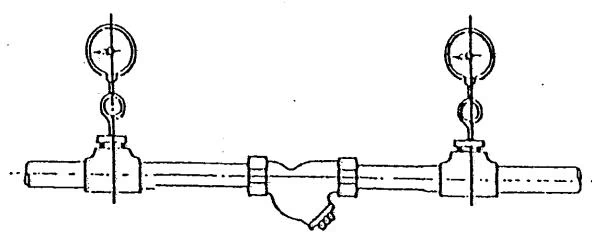 (Figure 1: Standard installation with cap facing downward)
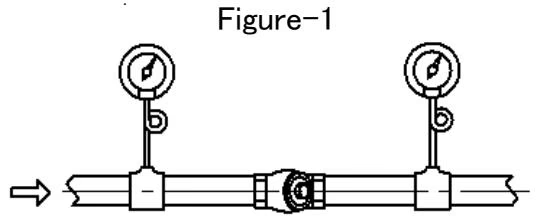 (Figure 2: For steam piping, install the strainer with the cap facing sideways to minimize condensate accumulation)
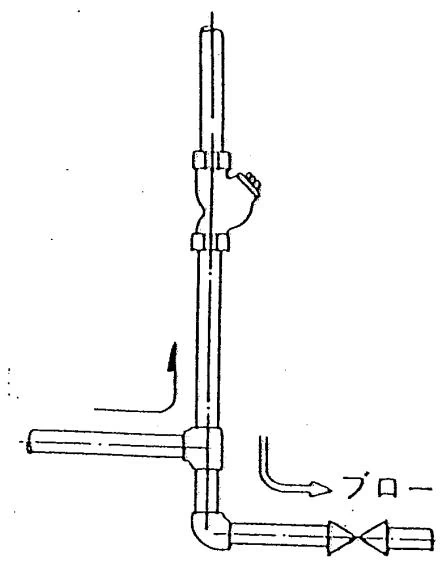 (Figure 3: For upward fluid flow, install a blow valve to remove scale accumulated at the bottom of the riser pipe)
Yoshitake Instrumentation / Strainers
SY, SU, SW, and ST series strainers for removing line debris and protecting downstream valves and equipment.